
How to Correct W-Sitting with Active Riding Toys
Many parents notice their toddlers sitting with their knees bent outward and feet splayed in a "W" shape. While common, frequent W-sitting can cause long-term orthopedic issues and delay core muscle development. Correcting this posture does not require constant verbal reprimands.
You can effectively modify your child's resting and playing position by introducing specific active equipment. This guide explains the mechanics of the W-sit and how active play naturally corrects lower body alignment and strengthens muscles.
The Biomechanics of W-Sitting
To understand how to correct a posture, it is necessary to understand why a child adopts it and what it does to their developing body. W-sitting occurs when a child sits flat on their buttocks with their knees bent forward and their feet positioned outside of their hips, forming the letter "W".
The Wide Base of Support
Children primarily adopt this position because it provides an exceptionally wide and stable base of support. In a W-sit, the child's center of gravity is locked closely to the floor. Because they are mechanically wedged into this position, they do not need to use their abdominal or back muscles to maintain their balance. This allows them to use both hands to play with objects in front of them without falling over. However, this artificial stability comes at a high physical cost to their joint health.
Joint Strain and Internal Rotation
Anatomically, W-sitting forces the hips into extreme internal rotation. The thigh bone (femur) twists inward to a degree that is unnatural for prolonged resting. Simultaneously, this position places abnormal torque on the knee and ankle joints. Over time, allowing a child to constantly sit this way can tighten the hip muscles, specifically the hamstrings and hip abductors. It can also loosen the joint capsules, making the child more prone to hip dysplasia or in-toeing, a condition where the child walks with their feet pointing inward.
Delayed Trunk Control and Midline Crossing
Because the wide base eliminates the need for trunk control, children who W-sit often suffer from delayed core strength. Weak abdominal muscles make it difficult for the child to shift their weight from side to side. Additionally, the locked posture of a W-sit restricts trunk rotation. This prevents the child from reaching across their body—a skill known as crossing the midline. Crossing the midline is necessary for establishing hand dominance and performing later motor tasks like writing or cutting with scissors.
Active Sitting: The Antidote to the W-Sit
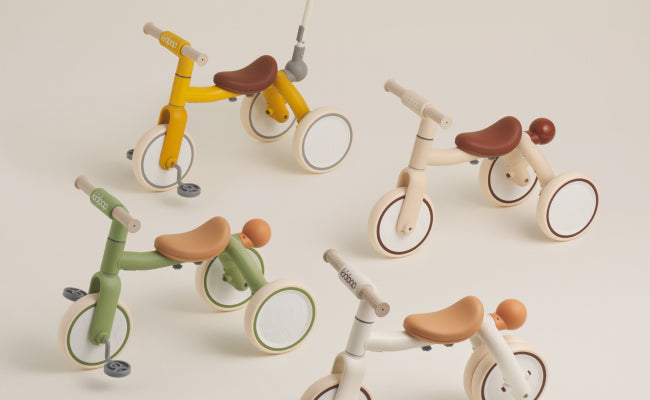
To effectively correct W-sitting, parents must provide alternatives that physically prevent the internal rotation of the hips. Encouraging active sitting is the most direct method to achieve this. A traditional ride on toy is an excellent tool for this intervention because its physical structure dictates the child's body positioning.
Promoting External Hip Rotation
When a child sits astride a saddle or a central seat, their legs are forced downward and outward. Sitting on a ride on toy requires external hip rotation, which is the exact anatomical opposite of the W-sit posture. This straddling position gently stretches the tight hip muscles caused by previous W-sitting habits. It encourages the hip joints, specifically the femoral head, to rest securely and correctly within the hip socket. This neutral alignment is required for healthy bone growth during early childhood.
Dynamic Balance Activation
Sitting on the floor is a static activity. In contrast, sitting on a wheeled vehicle is inherently unstable and dynamic. Because the toy can move, the child cannot rely on a locked joint position to stay upright. The child must actively engage their abdominal and lower back muscles to keep their torso centered over the seat. If they lean too far to one side to reach an object, their core muscles must contract to prevent them from falling off the toy. This continuous, low-level muscle activation builds the exact trunk strength that W-sitting neglects.
Choose the Right Width for Hip Alignment
When analyzing ride on toys, the physical dimensions of the equipment are critical. An improperly sized seat can fail to correct the W-sit or introduce entirely different orthopedic issues.
The Ideal Seat Width
The seat must be wide enough to naturally separate the child's knees. A proper width physically blocks the child from tucking their feet backward into a W-shape if they attempt to rest while on the vehicle. However, the seat should not be excessively wide. If the plastic base forces the child's legs too far apart, it places extreme tension on the inner thigh muscles (adductors) and limits their mechanical ability to push off the ground. The child's legs should fall at a comfortable, natural angle down the sides of the equipment.
Proper Foot Placement and Posture
The height of the seat relative to the floor is equally important. To encourage proper joint alignment, the child's feet must be able to rest completely flat on the floor when seated. If the toy is too tall and the child has to point their toes to reach the ground, they will reinforce poor ankle habits, such as toe-walking. Flat foot placement ensures that the force generated by pushing travels linearly up through the ankle, knee, and hip joints. Additionally, the handlebars should be positioned at a height that allows the child to keep their spine straight, preventing them from hunching their shoulders forward.
Strengthening the Core and Lower Body
Breaking the W-sitting habit permanently requires building the physical strength necessary for proper upright posture. If a child lacks core strength, they will always revert to the W-sit when they sit back on the floor. Active play equipment facilitates this necessary muscle growth through repetitive motion.
Bilateral Coordination and Leg Strength
Propelling a wheeled vehicle requires bilateral coordination. The child must push with both legs simultaneously to move forward, or they must alternate their legs in a reciprocal pattern. This repetitive pushing action heavily recruits the glutes, hamstrings, and quadriceps. Stronger leg muscles বাণিজ্যিকprovide better stability. When the child builds muscle mass in their legs, they experience less joint fatigue throughout the day, reducing their physical desire to drop into a resting W-sit.
Core Engagement During Movement
The body functions as a kinetic chain. When a child pushes off the ground, the force travels from their feet, through their legs, and into their pelvis. To transfer this energy into the forward movement of the toy, the child’s core must remain rigid. As the child propels the toy, they must constantly adjust their center of gravity to manage momentum and steer. This continuous adjustment fires the oblique muscles and the erector spinae along the back. As these core muscles grow stronger, the child will find it much easier to sit in healthier floor positions, such as ring-sitting or crisscross applesauce.
The Role of Push Walkers in Postural Correction
While seated toys address hip rotation, standing completely eliminates the possibility of W-sitting. For younger toddlers who are still developing their motor skills, transitioning from sitting to upright standing is a crucial step in preventing poor sitting habits from forming in the first place.
Transitioning to Upright Play
A sturdy push walker is highly effective for transitioning a child out of a seated floor position. When a child pulls up to hold the handle of a walking aid, their body weight is transferred vertically through the hips and down the legs. This upright alignment completely counters the bent, internally rotated posture of the W-sit. Weight-bearing through the legs in a standing position is essential for healthy bone density development and proper joint formation.
Enhancing Gait and Balance
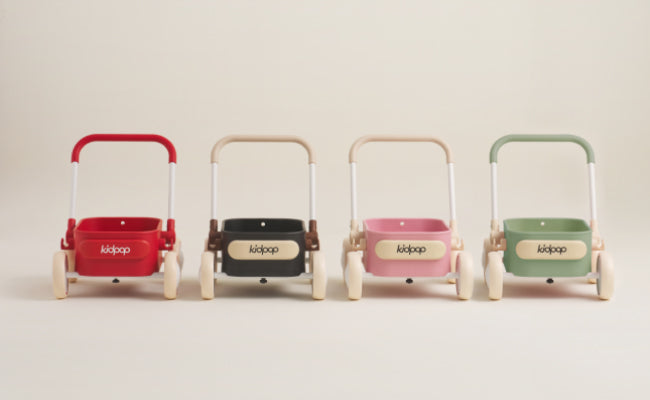
Among the various toys to help baby walk, a wheeled push cart provides mobile stability. As the child steps forward, they must maintain an upright posture against gravity. Using a push walker engages the entire posterior chain—the muscles along the back of the body, including the calves, glutes, and lower back. These are the primary muscles responsible for maintaining upright balance. Selecting high-quality, heavily weighted toys to help baby walk ensures the child has a safe base that will not tip backward as they pull themselves up. When a child spends more of their playtime engaged in upright, assisted walking, they spend less time sitting statically on the floor.
Conclusion: Developing Trunk Control and Promoting Orthopedic Alignment
Correcting a W-sitting habit requires early intervention and consistent physical redirection. By understanding the biomechanical flaws of the W-sit, parents can introduce targeted physical activities. Utilizing a ride on toy forces healthy external hip rotation, while upright tools like a push walker build essential core and leg strength. Encouraging your child to engage daily with these active toys to help baby walk will naturally develop their trunk control and promote proper orthopedic alignment for the future.
FAQs
Why is W-sitting considered bad for toddlers?
W-sitting places abnormal rotational stress on the hip, knee, and ankle joints. It provides an artificially wide base of support that prevents the child from using their core muscles to balance. Over time, this lack of core engagement can lead to delayed motor skills, poor posture, and tight leg muscles.
At what age should I stop my child from W-sitting?
You should correct W-sitting as soon as you notice it, typically around 12 to 18 months when children begin independent sitting and transitioning between floor positions. Early intervention prevents the posture from becoming a permanent structural habit. Simply repositioning their legs into a cross-legged sitting style helps immediately.
How do ride on toys fix W-sitting?
When a child sits on the saddle of these toys, the physical width of the seat separates the knees and forces the hips into external rotation. This alignment directly counters the internal hip rotation caused by the W-sit. It also forces the child to engage their abdominal muscles to stay balanced while moving.
Can W-sitting cause long-term physical problems?
Yes. Prolonged W-sitting can lead to permanently tight hamstrings, hip dysplasia, and in-toeing (walking pigeon-toed). It also contributes to poor trunk control, which can negatively affect a child's ability to run efficiently, jump, and perform bilateral movements later in childhood.
Are ride on toys better than floor chairs for posture?
Active wheeled toys are generally superior because they promote dynamic movement. The child must use their muscles to balance, push, and steer. Floor chairs or "sit-in" activity centers provide passive support that does not actively strengthen the core or leg muscles needed to prevent W-sitting.
