
Push Walker vs. Baby Walker with Wheels: Which is Safer for Learning to Walk?
As babies begin to pull themselves up on furniture, parents often look for tools to help them gain independence. This search usually leads to two distinct options: the traditional seated device and the standing push toy. However, a significant debate exists regarding safety and developmental benefits. Choosing between a push walker and a traditional baby walker is not just about preference; it is about safety. This guide examines the mechanics, risks, and benefits of each to help you decide which is safer for learning to walk.
What Are the Difference Between Walker Types?
The terminology can be confusing because both are often referred to generically as walkers.
A baby walker with wheels typically refers to a circular, hard plastic frame with a suspended fabric seat in the center. The baby sits inside the device, and their feet dangle to touch the floor. It effectively holds the baby upright while allowing them to scoot around using wheels attached to the base.
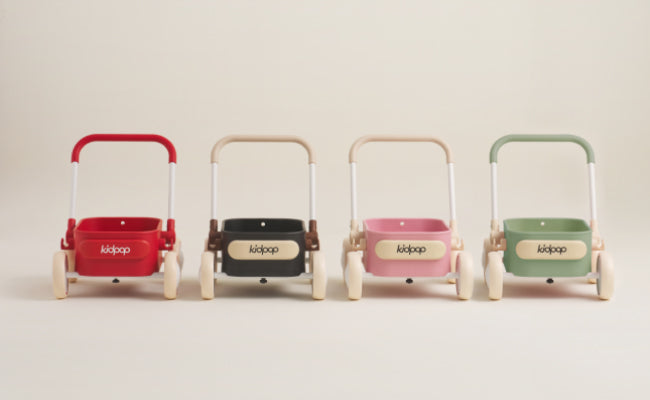
A push walker, on the other hand, is a stand-behind toy. It does not have a seat. It is a stable device with a handle that a baby holds onto while standing on their own two feet. The baby pushes the toy forward as they walk. These often look like small carts, strollers, or activity centers on wheels.
Evaluate the Risks of Seated Baby Walkers
For decades, the traditional baby walker with wheels was a household staple. However, safety standards have shifted dramatically. Many parents ask, are baby walkers safe when used in the traditional seated format? The short answer from most pediatric experts is no.
The primary danger lies in speed. A baby in a seated walker can move at speeds of up to three feet per second. This is much faster than a parent can react. This mobility allows babies to reach hazards they normally could not, such as hot ovens, heaters, or pools.
Furthermore, gravity is a major enemy here. The wheels allow the walker to roll easily. If a door to a staircase is left open, a baby can tumble down stairs while strapped into the heavy device. This scenario accounts for the majority of severe injuries associated with this type of equipment.

Analyze Developmental Delays Caused by Seated Walkers
Beyond immediate physical accidents, there is the issue of physical development. Parents often buy a baby walker with wheels believing it will teach their child to walk sooner. Research suggests the opposite may be true.
When a baby sits in a suspended seat, their hips and knees are often in a bent position. They tend to propel themselves by pushing off with their toes rather than placing their feet flat. This strengthens the wrong muscles for walking. It encourages "toe walking" and tightens the calf muscles.
Additionally, the device does the work of balancing for the child. Because the seat holds them up, they do not learn to engage their core or practice balance. Consequently, children who spend excessive time in these devices may actually reach walking milestones later than those who do not.
Consider the Safety Profile of Push Walkers
A Push walker is generally considered safer than its seated counterpart, though it is not entirely without risk.
The main safety advantage is that the child is not strapped into the device. If they lose their balance, they simply let go and fall to the floor, or sit down. They do not tumble down stairs trapped inside a heavy plastic frame.
However, supervision is still required. The most common issue with a push walker is that it might roll too fast for a beginner. If the wheels spin freely, the walker can shoot out from under the baby, causing them to fall forward. Many modern designs address this with adjustable resistance on the wheels to slow them down.
Examine Developmental Benefits of Push Walkers
From a physical therapy perspective, a push walker supports natural walking mechanics. To use one, the baby must pull themselves up to a standing position. This action alone builds crucial arm, leg, and core strength.
Once standing, the child must maintain their own balance. The walker provides stability, but it does not hold the child up. The baby bears their full weight on their legs. This encourages proper bone development and muscle strengthening.
Most importantly, using a stand-behind toy encourages a heel-to-toe walking pattern. Unlike the seated baby walker with wheels where babies scoot on toes, pushing a weighted object encourages the child to step flat-footed. This mimics the natural gait they will use for the rest of their lives.

Identify Key Features to Look For
If you decide that a push walker is the right choice for your family, select a model that prioritizes stability. A wide base is essential. The wheels should be spaced far apart to prevent the toy from tipping over sideways when the baby leans on it.
Weight is another factor. A walker that is too light will tip backward when a baby pulls up on the handle. Look for a model with a sturdy frame or one that allows you to add weight to the base.
Check the wheel traction. Smooth plastic wheels can slide uncontrollably on hardwood floors or tiles. Wheels with rubber strips or rubberized treads provide better grip. This friction slows the walker down, giving the baby more control over their speed.
Discover Versatile Options like Kidpop PULA
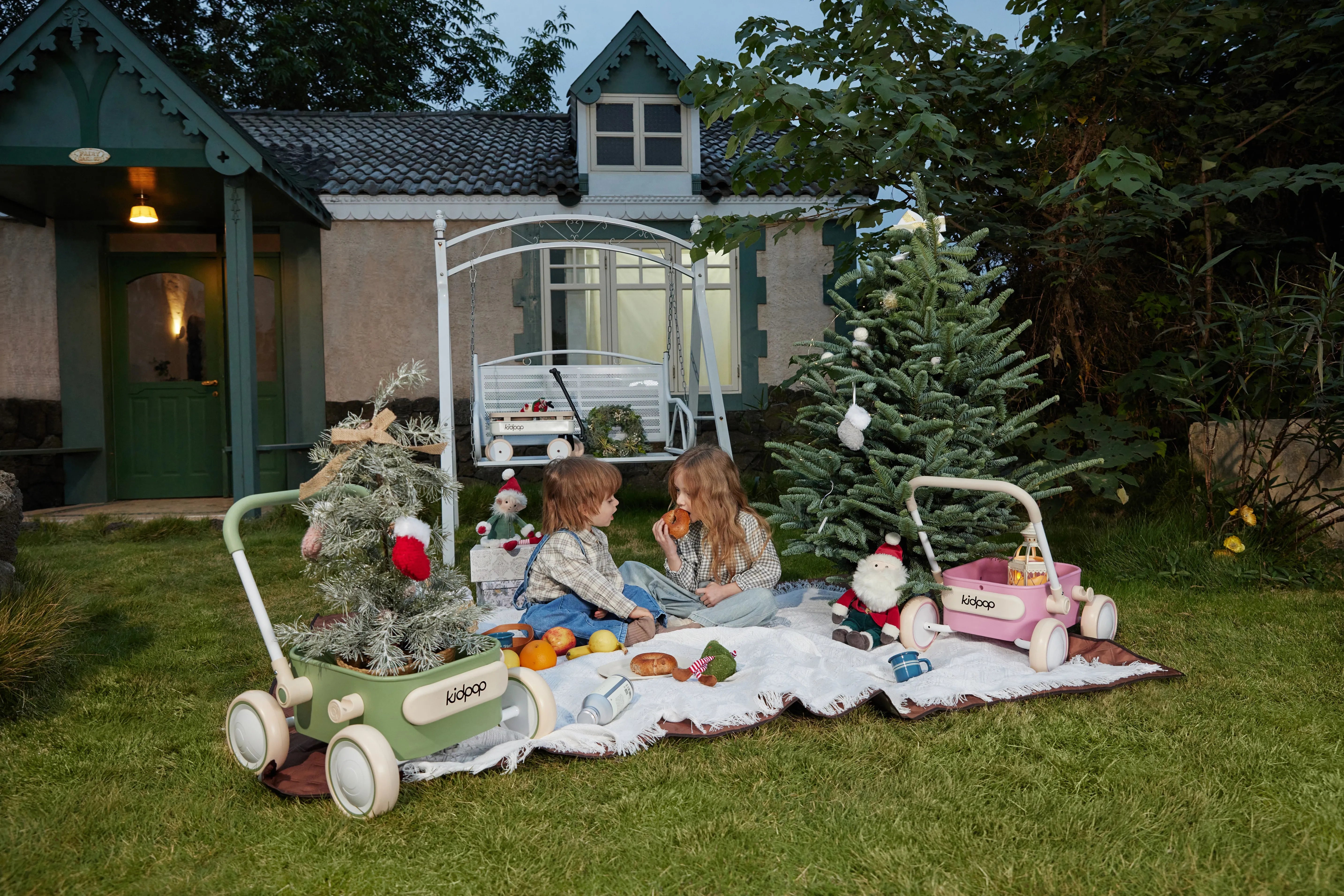
When looking for a high-quality alternative to the dangerous baby walker with wheels, choosing a product designed with child development in mind is crucial. The Kidpop PULA Baby Push Walker Toddler Wagon is a standout example of safe, functional design.
Recommended by child development experts, the PULA walker is designed for children aged 7 months to 4 years. It prioritizes natural movement. The height is optimized for little hands, allowing babies to find their balance comfortably. Its low center of gravity is a critical safety feature that prevents tipping, while the anti-slip, shock-absorbing wheels ensure a stable ride on various surfaces.
Beyond learning to walk, the PULA offers incredible versatility. It functions as a toy wagon for hauling treasures, and thanks to its food-grade PP construction, it can even serve as a mini splash tub for sensory play. The handle folds down easily, making it perfect for taking on family trips. This combination of safety, eco-friendly materials, and multi-stage utility makes it a superior choice for modern parents.
Create a Safe Environment for Learning
Regardless of whether you choose a standing toy or simply let your child cruise along furniture, environment preparation is key. Even the safest push walker requires a baby-proofed zone.
Install safety gates at the top and bottom of all stairs. This is the single most effective way to prevent serious falls. Ensure that there are no loose rugs that could cause the wheels to snag or the baby to trip.
Remove sharp corners from coffee tables or use corner guards. When a baby is learning to walk, falls are inevitable. Your goal is to ensure they fall on a soft surface like a carpet or foam mat rather than against a sharp edge or hard tile.
Review Regulatory Stances on Walkers
It is worth noting that the dangers of the seated baby walker are recognized globally. Canada officially banned the sale, advertisement, and import of baby walkers in 2004. This ban was a direct result of the high injury rates associated with the products.
In the United States, the American Academy of Pediatrics (AAP) has called for a similar ban. They strongly advise parents against using seated walkers. They state that these devices provide no developmental benefit and pose significant risks.
When parents ask are baby walkers safe, these regulatory stances provide a compelling answer. The consensus among health professionals is to avoid the seated variety entirely in favor of stationary activity centers or push toys.

Conclusion: The Safer Choice for First Steps
The evidence is clear when comparing the two types of mobility aids. The conventional baby walker with wheels is not only dangerous for the baby but also doesn’t play any beneficial role in development. In contrast, a push walker enables the baby to grow muscles in a proper way for proper walking in an environment that has fewer risks. For those who are going for the best baby product that can assist the baby to conquer its first steps, parents should consider a push toy or a multi-functional product such as Kidpop PULA.
FAQ
Q1: At what age can a baby start using a push walker?
A: Typically, babies are ready to use a push walker when they are able to pull themselves up to stand and bear their weight on their legs. This will happen around 9 to 12 months old. It is essential to refer to the manufacturer’s recommended age for use of the toy in question.
Q2: Do push walkers cause bow legs?
A: No. Unlike the seated walker, which could place abnormal stress on the hips and legs with excessive use, push walkers permit the child to stand normally. In this way, the weight of the child is supported in a fashion consistent with natural physiological growth and development.
Q3: How can I stop a push walker from moving too fast?
A: Some walkers have tension dials on the wheels. If this is not the case for your walker, you must practice using it on a rug that offers your child natural friction. To slow your baby down further, you can weigh your walker’s base down with heavy books if it has a basket.
Q4: Are stationary activity centers a good alternative to walkers?
A: Yes. Stationary activity centers, commonly referred to as exersaucers, enable a child to stand, bounce, and play without the chance of rolling down stairs or accessing dangerous objects. This is a safe alternative to a baby walker.
