
Holiday Gifts for New Parents: The Best Riding Toys by Age (0–5 Years)
Browsing the aisles of an infant buying trip might leave one drifting away amongst the various adorable clothing and cuddly toys on offer. But if you’re looking at selecting that special holiday gift that’s really going to make a child’s life different, how about something that can grow with them?
How about a ride-on toy that can really help the child grow with the gift that’s given? This advice will aid in selecting the right age-specific ride-on toy that can make the child’s day just a bit brighter.

Why Are Ride-On Gifts Perfect for New Parents?
A ride-on toy is more than just a way to keep a child entertained; it's a powerful developmental tool disguised as fun. These toys are fantastic for building gross motor skills, improving balance and coordination, and fostering a sense of independence. For new parents, a gift that helps their child burn off energy and hit developmental milestones is a true win-win. It’s an investment in active, healthy play that will be used and loved for years, long after those newborn onesies have been packed away.
Quick Decision Helper: Not Sure What to Buy?
Choosing the right toy can be confusing. Here's a quick cheat sheet to help you match the perfect ride-on to a child's current developmental stage:
- If the baby cannot walk yet: A Push Walker or a Pull-Along Wagon.
- If the child walks steadily but won’t pedal: An Indoor Ride-On or a Pre-Balance Bike.
- If the child walks steadily and coasts with feet up: A 10–12 inch Balance Bike.
- If the child needs parent control and a pedal intro: A Toddler Tricycle with a Parent Handle.
Safety & Sizing First: What Helmet and Measurements Matter for Gifts?
Before we get to the fun stuff, let's talk safety. Any toy with wheels comes with the risk of a tumble, so a properly fitting helmet is a non-negotiable accessory for any ride-on gift. Start the "no helmet, no ride" rule from day one to build a lifelong safety habit.
Sizing is equally important for both safety and usability. The most crucial measurement for any ride-on toy is the child's inseam (the length from their crotch to the floor). The seat height of the toy should be equal to or slightly less than their inseam, allowing them to place their feet flat on the ground for stability and control. For optimal control, choosing the right size is very important. Most experts recommend a seat height about 1-1.5 inches lower than the inseam to allow for a slight bend in the knees.
0–12 Months: Push Walker / Pull-Along Wagon
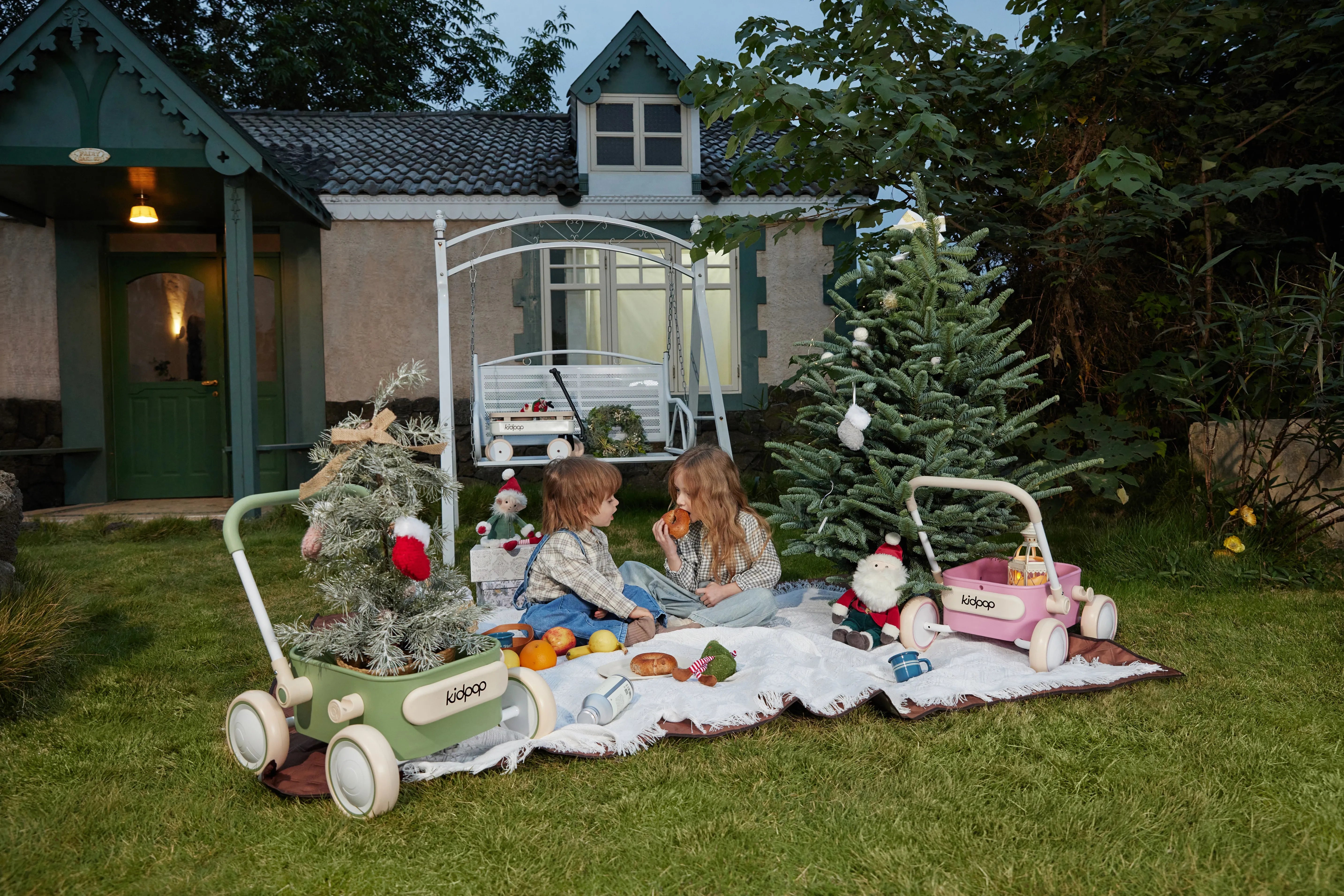
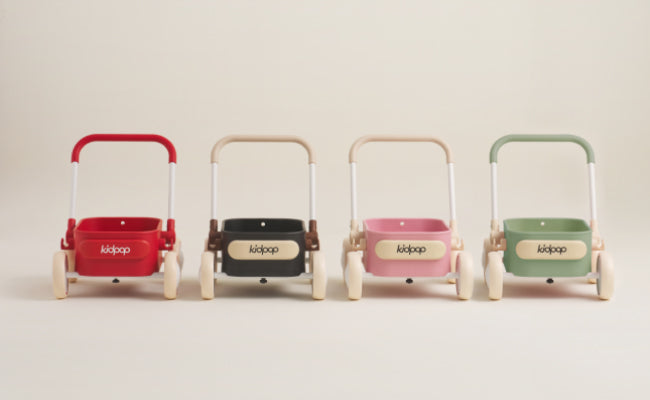
For the baby who is just starting to pull themselves up and take their first wobbly steps, a push walker is the perfect companion. It provides a stable base of support, giving them the confidence to practice walking while pushing their favorite toys around. Our collection of wagons offers excellent support for your child's first steps.
Look for a model with a sturdy, well-balanced design. A fantastic choice for this stage is the Kidpop PULA Baby Push Walker. It's more than just a walker; it cleverly doubles as a toy storage wagon or a ride-along, ensuring it remains a beloved toy long after they've mastered walking.

12–18 Months: First Ride-On / Pre-Balance
Once a toddler is walking steadily, they are ready for their first true ride-on toy. At this stage, the goal is to introduce the concept of sitting and moving. A pre-balance bike, which is a low-to-the-ground, four-wheeled ride-on, is an excellent choice.
This type of baby bike is incredibly stable and allows the child to scoot around using their feet, building the foundational muscles and coordination needed for a two-wheeled bike later on. For an adorable and safe first ride, the BEE Baby Balance Bike is a wonderful option. Its bee-inspired design is a hit with kids, while the low-step frame and anti-slip tires make it perfect for little explorers.

18–24 Months: Balance Bike Beginnings
As your toddler's confidence grows, they are ready to transition to a two-wheeled balance bike. This is arguably the most important step in learning to ride a real bicycle. A balance bike has no pedals; the child propels it by pushing off the ground with their feet and then glides, learning the crucial skill of balance.
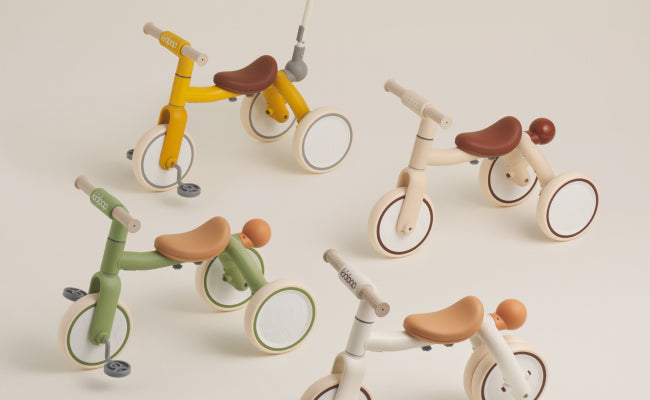
A great starter model for this age is the TOAST Baby Balance Bike. Imagine your little one zooming through the living room with their favorite stuffed animal tucked into the spacious storage basket. Its plush seat and quiet wheels make it a parent-favorite for indoor and outdoor play.
2–3 Years: Tricycle with Parent Handle
The classic toddler tricycle is a rite of passage for many children. At this age, they are developing the coordination to learn the complex motion of pedaling. A tricycle provides the stability they need while they figure it out.
A model with a parent push handle is essential, as it allows you to guide them and prevent frustration when their little legs get tired. A multi-functional option like the PONY 4-in-1 Kids' Tricycle is an incredibly smart investment. It can be used as a balance bike, a push bike, or a tricycle, adapting to your child's skills as they grow and providing years of versatile fun.

3–5 Years: Bigger Balance Bike or Pedal-Ready
By this age, children are ready for more speed and independence. If they have mastered a smaller balance bike, upgrading to a bigger balance bike will allow them to continue honing their skills. The BIG BEE Baby Balance Bike is a perfect next step, offering the same beloved design in a size that fits growing kids. For a more minimalist and stylish option, the RIGHT Balance Bike is an award-winning, feather-light bike that is easy for kids to handle and builds confidence fast.
If a child has been on a tricycle, this is the age where they might be ready to transition to a small bicycle with pedals and training wheels.
Choosing the Perfect Ride-On Toy: Your Complete Gift Guide
A ride-on toy is a holiday gift that brings so much more joy than just a few minutes of entertainment. This type of gift is an investment that will pay back enormous dividends with the child’s physical and personal development. By selecting the right baby bicycle or baby walker that suits the child’s age group, the child receives the ultimate gift that will remain with them from their first experience of walking up until their first experience of gliding fearlessly.
FAQs About Toddler Balance Bikes and Ride-On Safety
Q1: What age should a toddler start a balance bike?
Most kids are developmentally ready on a balance bike at the age of 18 months through 2 years of age after mastering walking skills. This works well as the best instrument for balancing.
Q2: Do toddlers need helmets on trikes and ride-ons?
Yes, definitely! A helmet must be worn each time the child mounts their vehicle, whether the toy appears very slow-moving or very stable, because it keeps them safe if they suddenly go down.
Q3: Can 1-year-olds use ride-ons safely indoors?
Yes! A low four-wheeled ride-on or the pre-balance bike is just right for indoor play. This enables them to attempt scooting in a controlled setting. This could come during poor weather conditions.
Q4: How do I measure inseam and match seat height?
Position the child upright. Bring a book between the child’s legs and place the book at the crotch area. Measure the height of the top of the book on the floor. This is their inseam. The seat of the bicycle should be at the same height as this measurement.
