
Toddler Riding Toy Size Chart (Inches): Push Walkers, Tricycles & Balance Bikes
Choosing your toddler’s first riding toy is an exciting milestone, but navigating the world of kids bike sizes can be confusing. A toy that's too big is unsafe and frustrating, while one that's too small is quickly outgrown. The secret to getting it right isn't the manufacturer's age range; it's a couple of simple measurements you can take at home.
This guide will provide a clear, inch-based kids bike size chart and method for push walkers, tricycles, and balance bikes, ensuring a perfect fit for maximum fun and safety.

30-Second Size Picker: Not Sure What Fits?
If you're in a hurry, this quick-reference table matches the toy type to the single most important measurement you need. We'll explain how to get these measurements in the next section.
| Riding Toy Type | Key Measurement to Check (Inches) | What a Perfect Fit Looks Like |
| Push Walker | Child's Height | Handle is at chest/tummy level for an upright posture. |
| Toddler Tricycle | Seat-to-Pedal Distance | Child's leg has a slight bend at the bottom of the pedal stroke. |
| Balance Bike | Child's Inseam | Seat height is 1-1.5" below inseam for flat feet on the ground. |
Quick Fit Finder (Inches)
Enter a few details about your toddler to see which ride fits best – push walker / wagon, tricycle, or balance bike.
Add age and height to see a recommendation. You'll get a suggested vehicle type, seat height range, and wheel setup.
What Measurements Do You Need Before Buying?
While a product box might say "Ages 2-4," toddlers of the same age come in all shapes and sizes. Relying on age alone is the most common sizing mistake. To ensure a safe and comfortable fit, you only need two key measurements in inches: your child's inseam and their reach.
The inseam is the most critical measurement for any toy with a seat, as it dictates whether your child can comfortably reach the ground or the pedals. The reach helps determine if the handlebars will be in a comfortable position. These two numbers will give you far more accuracy than any age guideline.
How to Measure Inseam & Reach (Inches)
Getting these numbers is quick and easy. All you need is a tape measure, a hardcover book, and your toddler’s cooperation for about a minute.
The inseam is the distance from the crotch to the floor. This is the most important number for sizing a balance bike or toddler tricycle.
- Have your child stand straight with their back against a wall, wearing the shoes they’ll typically ride in.
- Place a hardcover book between their legs and slide it up the wall until it's snug against their crotch, simulating a bike seat.
- Ask your child to step away, but keep the book pressed against the wall. Measure from the top of the book spine straight down to the floor. That’s the inseam.
Reach helps determine handlebar comfort. While less critical than inseam for toddlers, it's a useful secondary measurement. Have your child stand straight with their arms relaxed at their sides. Measure from their collarbone to the center of their palm. This gives you a general idea of a comfortable handlebar distance.
Push Walker / Pull-Along Wagon: What Size Is Right?
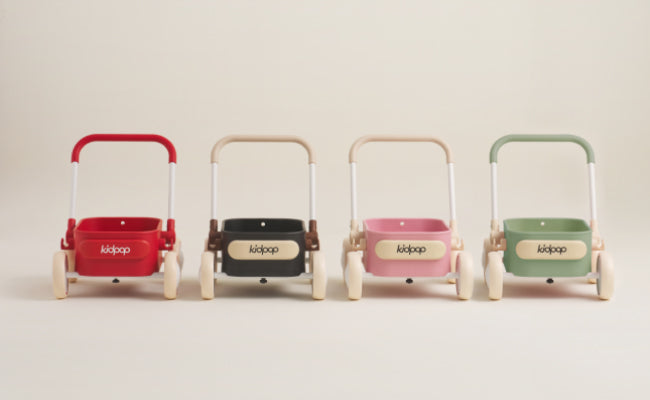
For a pre-walker or early walker, the fit of a push walker is all about promoting a healthy, upright posture. The key metric here is the handle height. The handle should be positioned at roughly your child's chest or upper tummy level.
This height encourages them to push forward while standing tall, using their core and leg muscles correctly. If the handle is too high, the toy can become top-heavy and tip easily. If it's too low, it will force your child to slouch over, which hinders their balance and walking development.
Tricycle Sizing: Seat Height & Pedal Distance
For a toddler tricycle, the most important fit factor is the distance from the seat to the pedals. To pedal efficiently and comfortably, your child's leg should have a slight bend when the pedal is at its lowest point.
If the seat is too low, their knees will be bent too much, making pedaling awkward and inefficient. If the seat is too high, they won't be able to reach the pedals or will have to fully extend their leg, which offers poor control. Many toddler tricycles have adjustable seats, so check the manufacturer’s recommended seat height range against your child's measurements before buying.
Balance Bike Sizing: Wheel & Seat Matrix
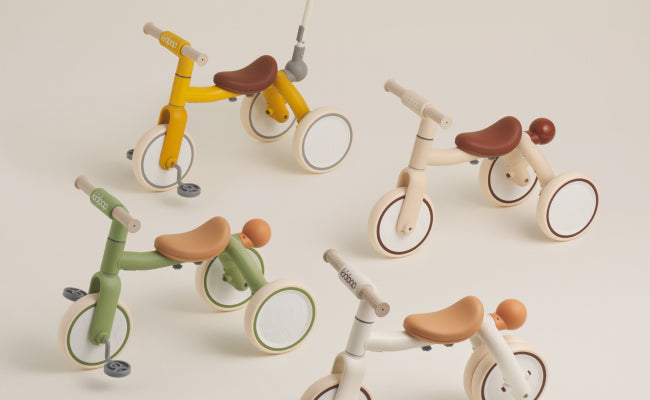
Sizing a balance bike is where the inseam measurement becomes absolutely critical. For a child to learn to balance and glide confidently, their feet must be able to rest flat on the ground while they are seated, with a slight bend in their knees. This provides stability and the ability to push off effectively.
The golden rule for balance bike sizing is: Seat Height = Inseam - 1 to 1.5 inches. This small gap gives them the perfect knee bend. Here is a sample kids bike size chart to guide you:
| Child's Inseam (Inches) | Recommended Seat Height (Inches) | Typical Wheel Size (Inches) |
| 11" - 13" | 10" - 11.5" | 10" or 12" |
| 13" - 15" | 11.5" - 13.5" | 12" |
| 15" - 17" | 13.5" - 15.5" | 12" or 14" |
| 17" - 19" | 15.5" - 17.5" | 14" or 16" |
Always check the actual seat height range of the specific balance bike model you are considering.

Fit at Home: The 60-Second Check
Once you have the new toy assembled, perform this quick check to confirm the fit:
- For a balance bike: Have your child sit on the seat. Are their feet completely flat on the ground? Is there a slight bend in their knees? Can they easily walk the bike forward?
- For a tricycle: Ask them to place their foot on a pedal at its lowest point. Is their knee slightly bent? Can they make a full rotation without their knees hitting the handlebars?
- For a push walker: When they stand and hold the handle, are they upright with their arms slightly bent, or are they slouching or on their tiptoes?
When Should You Size Up (Without Buying Too Big)?
It's tempting to buy a toy your child can "grow into," but this is often unsafe. A bike that is too large is difficult to control and can lead to falls and a loss of confidence. Wait until your child is showing clear signs they are outgrowing their current ride.
These signs include having the seat post at its maximum height, their knees coming up very high or hitting the handlebars when pedaling, or generally looking cramped. When you do size up, still use the inseam measurement to ensure the new toy isn't too big to be used safely right away.

Common Sizing Mistakes & Quick Fixes
Mistake 1:
Trusting the Age Range. Ages are just averages.
Quick Fix: Always prioritize your child's inseam measurement over the age recommendation on the box.
Mistake 2:
Ignoring the Seat Height Range. Not all 12" bikes are the same.
Quick Fix: Before you buy, look up the product's specifications online and check its minimum and maximum seat height to ensure it matches your child's inseam.
Mistake 3:
Forgetting About Shoes. Shoes can add an inch or more to an inseam measurement.
Quick Fix: Always measure your child's inseam while they are wearing the shoes they will be riding in.
Getting the Perfect Fit: Your Kids Bike Size Chart Summary
Selecting the right size toddler ride doesn't necessarily need to be a shot in the dark. You can simply take an inseam measurement and entirely disregard confusing charts of ages in favor of a straightforward and intuitive measurement system based on inches. The right-sized push walker, toddler tricycle, or balance bike is not only safer, but it's also far more fun, and your child will need all the encouragement they can get if they ever hope to develop a lifelong love of riding.

FAQs About Toddler Bike and Ride-On Sizing
Height or inseam, which should I trust more?
Whether it's a seat-related toy such as a tricycle or a balance bike, inseam is far more reliable and significant than overall height. The principle applies directly to leg measurements and the capacity to touch either the ground or pedals with one's legs. Overall height would be more applicable to seatless items, such as a push walker and/or scooter.
What if my child is between two sizes?
It's almost always better to pick the smaller one. A bicycle that's slightly smaller is still manageable, but one that's larger can be very hazardous. Another method would be to see which has the lowest seat height requirement between the two sizes and pick the one that lets your kid plant his or her feet flat on the ground.
Do shoes change the seat height I pick?
Absolutely, yes. Shoes can add an inch and possibly more to your child's inseam measurement. To get an accurate inseam measurement, you must measure your child while wearing the shoes he will ride in.
Indoor riding — which wheel size is best?
When it comes to indoors, smaller is better. The shorter wheelbases and turning circles of products such as push walkers, tricycles, and balance bikes with 10” or 12” tires are considerably easier to handle indoors. Larger tires are designed with the outdoors in mind.
How heavy should the bike be for toddlers?
One of the best rules of thumb in this regard is that your toddler's tricycle or balance bike ought not to exceed 30% of your toddler's overall body weight. The lower the toddler tricycle's weight, the easier it will be for your toddler to manage and lift if he or she takes a tumble. The lighter, the better, especially for a young child.
