
The "Step-Over Height" Rule: The Most Overlooked Measurement in Toddler Bike Shopping
The most overlooked—and most critical—measurement in toddler bike shopping is the "step-over height." This guide explains the biomechanics of the step-over height, how to measure your child’s inseam accurately, and why getting this specific measurement right guarantees a safe, confidence-building riding experience.
Define the "Step-Over Height" and Why It Matters
The "step-over height" (also known as stand-over height) is the vertical distance from the ground to the top tube of the bicycle frame, right in front of the seat. It represents the physical barrier a child must lift their leg over to mount the bike.
Why Biomechanics Matter for Toddlers
For a toddler, mounting a bike is a complex biomechanical task that requires standing on one leg while lifting the other leg high into the air. If the step-over height is too tall, the child cannot swing their leg over the frame without tipping the bike toward themselves. This often results in the heavy metal frame falling on top of the child before they even start riding. When looking for a toddler bike for 1 year old beginners, the step-over height must be exceptionally low because 12-month-old infants are still developing basic walking balance and lack the hip flexibility to clear high obstacles.
Building Early Riding Confidence
A low step-over height directly impacts a child's confidence. If they can easily step over the frame and place both feet flat on the ground while straddling the top tube, they feel secure. This physical security is the primary factor in determining whether a child will enjoy riding or refuse to use the toy altogether.
Measure Your Child’s Inseam vs. Bike Height
To ensure a perfect fit, you must stop guessing based on your child's age and start measuring their specific anatomy. The child's inseam is the only measurement that truly dictates which bike they can ride safely.
How to Measure a Toddler's Inseam
Measuring a wriggly toddler requires a specific technique:
- Have your child stand flat against a wall, wearing their usual outdoor shoes.
- Place a hardcover book between their legs, sliding it up the wall until it meets their crotch (simulating the pressure of a bike seat).
- Ensure the top of the book is level, and measure the distance from the top of the book straight down to the floor.
The Inseam-to-Seat Ratio
Once you have the inseam measurement, compare it to the minimum seat height of the bicycle. The golden rule for a best bike for 2 year old beginners is that the child’s inseam must be at least 1 to 1.5 inches longer than the lowest seat setting. Furthermore, the inseam must be at least 2 inches longer than the step-over height of the frame. This guarantees that when the child stops the bike, they can stand flat-footed over the frame with clearance to spare, preventing painful impacts during sudden stops.
Ride From Trikes to Balance Bikes
As children grow, the geometry of the vehicles they ride changes significantly. Understanding this evolution helps parents choose the right frame design for their child's current motor skills.
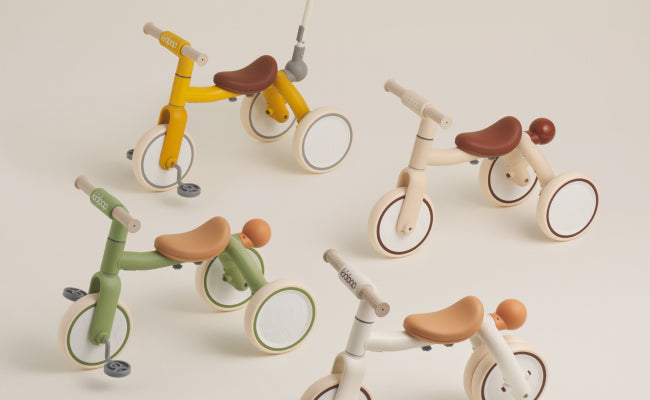
A toddler bike for 1 year old is typically a ride-on toy or a low-to-the-ground tricycle. These vehicles feature a "step-through" frame rather than a "step-over" top tube. The frame drops down into a U-shape near the floor, allowing the child to simply walk into the seat area. This is necessary because 1-year-olds do not yet have the dynamic balance required to straddle a high bar safely.
By age two, children begin using balance bikes. The best bike for 2 year old riders is a lightweight, two-wheeled balance bike with a slightly slanted top tube. Manufacturers design these frames to angle downward from the handlebars to the seat post. This slanted geometry reduces the step-over height near the seat, making it easier for a 2-year-old to mount the bike while still providing the structural strength needed to support their weight as they coast over bumps.
Evaluate the Impact of Tire Size on Stand-Over Clearance
Parents often confuse wheel size with frame size. While the two are related, a smaller wheel does not automatically guarantee a low step-over height.
How Wheels Elevate the Frame
The axle of the wheel sits at the center of the tire. Therefore, a bike with 12-inch tires physically raises the entire frame higher off the ground than a bike with 10-inch tires. If a manufacturer builds a large, bulky frame and places it on 12-inch wheels, the step-over height may be too extreme for a young toddler, even if the box claims the bike is "for ages 2-4."
The "Fat Tire" Phenomenon
Many modern toddler bikes feature extra-wide, pneumatic "fat tires" to absorb shock on dirt trails. While excellent for comfort, thick tires increase the overall height of the bike. When deciding what size bike for 5 year old children is appropriate, you must account for the tire thickness. A 16-inch bike with standard street tires will have a lower step-over height than a 16-inch bike equipped with thick, knobby mountain bike tires. Always check the final, assembled stand-over height listed in the manufacturer's specifications, rather than relying solely on the wheel diameter.
Avoid the "Buying to Grow Into" Trap
The most common mistake parents make when buying a bicycle for 2 year old or older children is purchasing a size too large with the intention that the child will "grow into it." This is a dangerous and counterproductive strategy in cycling.
If a bicycle for 2 year old children has a step-over height that is too tall, the child cannot put their feet flat on the ground when sitting on the saddle. They are forced to balance on their tiptoes. This prevents them from stopping the bike effectively. In an emergency, a child on a too-large bike will simply fall over sideways because they cannot plant their feet to stabilize the heavy frame.
Bicycles are heavy. An oversized bike is harder to steer, harder to pedal, and terrifying to stop. Instead of learning balance and coordination, the child spends all their energy fighting the size and weight of the machine. This fear often causes the child to reject the bike entirely. It is always better to buy a correctly sized bike with an adjustable seat post than to buy a larger frame that the child cannot straddle safely today.
Test for "Straddle Success" Before You Buy
If you are purchasing a bike in a physical store, you can bypass the measuring tape by performing a simple physical test.
Have your child stand over the top tube of the bicycle, directly in front of the seat (not sitting on the seat). The child must be wearing their normal play shoes. Both feet must be completely flat on the floor.
While the child is standing flat-footed, check the space between their crotch and the top tube. You should be able to slide at least one to two inches of clearance between the child and the metal frame. If the frame is touching the child while they are standing flat-footed, the step-over height is too high, and you must select a smaller model. When figuring out what size bike for 5 year old children is correct as they transition to larger pedal bikes, this straddle clearance remains the most reliable indicator of a safe fit.
Conclusion: Ensuring Safety and Confidence with the Step-Over Height Rule
Selecting a child's bicycle requires more than checking the age recommendation on the box. The step-over height is the definitive measurement that ensures safety, comfort, and riding success. By accurately measuring your child's inseam and ensuring they have adequate straddle clearance over the frame, you prevent dangerous falls and foster immediate confidence. Whether you are purchasing a first ride-on toy or transitioning a 5-year-old to pedals, strictly adhering to the step-over height rule guarantees that the bike will fit your child’s physical capabilities today, leading to years of joyful outdoor riding.
FAQs
What is the difference between seat height and step-over height?
Seat height is the distance from the ground to the top of the saddle where the child sits. Step-over height (or stand-over height) is the distance from the ground to the top metal tube of the frame that the child must lift their leg over to mount the bike.
Can a 2-year-old ride a 12-inch bike?
This depends entirely on the child's inseam and the specific bike's step-over height. Some tall 2-year-olds can safely straddle a 12-inch balance bike, while others require a 10-inch model with a lower frame geometry. Always measure the inseam first.
Why do some toddler bikes not have a top tube?
A toddler bike for 1 year old or early 2-year-old riders often features a "step-through" frame (U-shaped) rather than a top tube. This design eliminates the step-over height entirely, allowing infants with limited hip flexibility and balance to walk into the bike easily.
Is it okay if my child is on their tiptoes while straddling the bike?
No. If a child is on their tiptoes while standing over the frame, the bike is dangerously oversized. They will not be able to stop the bike safely in an emergency and are at high risk of falling sideways.
How much clearance does my child need over the top tube?
For a safe and comfortable fit, a child should have a minimum of 1 to 2 inches of vertical clearance between their body and the top tube when standing flat-footed over the bicycle frame.
