
Why a 135° Steering Limiter is Critical for Toddlers (10-24 Months)
Watching your child take their first independent ride is a milestone filled with joy. However, for many parents, that excitement is quickly dampened by a sudden crash. One moment the toddler is gliding, and the next, they are tumbling over the handlebars. This specific type of accident is common and preventable. It usually stems from a design flaw in many toys: unrestricted steering.
For children between 10 and 24 months, a safety feature known as the 135° steering limiter is not just an add-on; it is essential. This guide explains why this mechanism is critical for preventing falls and building confidence on a baby balance bike.

The Physics of Falling: What is "Jackknifing"?
The most dangerous type of crash for a new rider is the "jackknife." This occurs when the front wheel turns too sharply, effectively locking perpendicular to the frame.
The Mechanics of the Crash
When the wheel turns 90 degrees or more while the bike is moving forward, it acts as an immediate brake. The forward momentum of the child continues, but the bike stops instantly. This typically throws the child over the handlebars or causes the bike to tip violently to the side. For a toddler balance bike without limits, this can happen simply because the child sneezed, looked away, or hit a small bump that jerked the handlebars. Research confirms that non-fatal fall injury rates are highest among children aged 1 to 4 years old, making fall prevention a top priority for this age group.

Why Toddlers are Vulnerable
Children in the 10-24 month age range lack the arm strength and reflexes to correct a sharp turn. Their center of gravity is high (big heads, small bodies), making them unstable. Once the wheel turns past a certain point, they physically cannot pull it back to center before gravity takes over.

How the 135° Limiter Works (The "Goldilocks" Zone)
The solution to the jackknife problem is mechanical intervention. A 135° steering limiter is a physical stop built into the headset of the bike. It prevents the handlebars from turning more than 45 degrees to the left or right (totaling a 135-degree range of motion, though often marketed simply as a safety limit).
Why 135 Degrees?
It allows enough movement for the child to steer around corners and navigate obstacles, ensuring they learn directional control. However, it physically stops the wheel from turning far enough to cause a jackknife.
The Safety Net
Think of it as training wheels for steering. It keeps the front wheel within a safe cone of operation. If the child jerks the handle, the limiter catches the motion, keeping the bike upright and moving forward. This prevents the sudden stops that cause the most tears and injuries on a baby balance bike.

Does Age Matter? Steering vs. Leaning
The necessity of this feature is directly tied to the balance bike age and developmental stage of the rider.
10-24 Months: The Steering Phase
At this young age, children steer primarily by turning the handlebars. They are learning cause and effect: "I turn the bar, I go that way." Their movements are often jerky and imprecise. They do not yet understand the concept of leaning to turn. Therefore, limiting the steering angle protects them from their own lack of coordination while they master the basics of pushing and gliding.
2+ Years: The Leaning Phase
As children grow older and faster, the mechanics of riding change. They begin to lean into turns rather than just turning the bars. At this later stage, a steering limiter might feel restrictive for an advanced rider who needs to make sharp, high-speed maneuvers. However, for the target demographic of a toddler balance bike (under 2 years), the limiter is a safety necessity, not a performance hindrance.
How to Choose the Right Tool for Each Stage
Parents often want a toy that lasts forever, but safety features must match the child's current ability. When shopping for a ride-on, check the specifications for steering limitations.
Look for bikes explicitly stating "steering limiter" or "limited turning radius." Test it yourself by trying to turn the handlebars all the way around. If they stop before hitting the frame or turning perpendicular, the limiter is present.
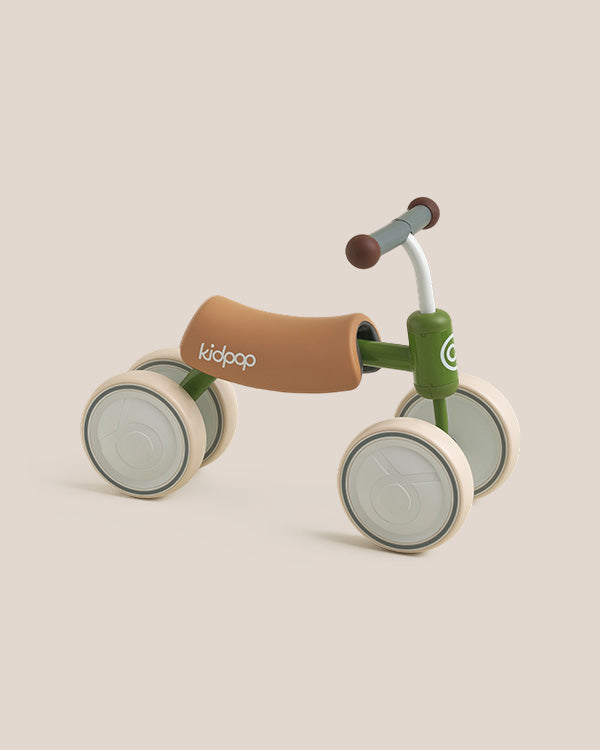
Start with a four-wheeled or wide-wheeled baby balance bike with a limiter for the 10-18 month stage. This provides maximum stability. As they approach 2 years old and master speed, you can transition to a two-wheeled balance bike without a limiter. Using the right tool at the right time prevents frustration. A child who crashes constantly because of a jackknifing wheel will develop a fear of riding, whereas a stable experience builds the confidence needed to progress. The American Academy of Pediatrics (AAP) strongly recommends that children use age-appropriate riding equipment from their very first ride to ensure safety and build confidence.

Conclusion: Choose the Right Limiter, Give Your Toddler a Safer First Ride
Safety is the foundation of fun. For a toddler taking their first strides on wheels, the biggest threat is not speed, but over-steering. The jackknife crash is a frightening experience that can derail a child's interest in riding. By choosing a bike equipped with a 135° steering limiter, you effectively eliminate this risk. You provide your child with a safe environment to explore balance and motion. This simple mechanical feature ensures that their first experience on a toddler balance bike ends with smiles and progress, rather than scrapes and tears. Peer-reviewed research confirms that children who practise on balance bikes develop riding skills faster and with better balance outcomes than those who do not.
FAQ
Will a steering limiter hinder my child's learning?
No. For the balance bike age of 10-24 months, it actually accelerates learning. By preventing crashes, it allows the child to focus on leg movement and balance without the constant fear of the bike tipping over due to erratic steering.
My toddler keeps falling off their current bike. Is it the lack of a limiter?
It is very likely. Watch their falls. If the handlebar turns sideways and the bike stops abruptly, causing them to tumble, a lack of steering limitation is the culprit. Switching to a bike with a limiter will likely solve this immediately.
Can I remove the limiter later?
On most baby balance bike models designed for this age group, the limiter is integrated into the frame or fork and cannot be removed. However, by the time your child outgrows the need for it, they will likely be physically too big for the bike anyway and ready for a larger model.
Is this feature necessary for indoor riding?
Yes. Even at slow speeds on carpet, a jackknife can happen. In fact, tight indoor spaces often cause children to try and turn sharply to avoid furniture, increasing the risk of over-steering. A limiter keeps them safe while navigating hallways and living rooms.
At what age should I switch to a bike without a limiter?
Typically, once a child is running confidently on the bike and starting to lift their feet to glide (around 2 to 3 years old), they are ready for a bike with full steering range. At this point, their reflexes are fast enough to handle the instability.
