
Imagination at Play: 5 Pretend Play Activities Using Your Toddler’s Bike Basket
Toddlers have a magical ability to turn everyday objects into sources of endless wonder. A simple baby balance bike is not just a tool for learning to ride; it is a vehicle for their imagination. The addition of a small storage compartment transforms the bike into a delivery truck, a grocery cart, or an ambulance. Parents often underestimate how a bike with a basket can enhance creative play. This guide explores five engaging pretend play activities that utilize your child's bike basket to boost cognitive skills, coordination, and hours of fun.
1. The Little Courier: Delivery Games for Logic and Direction
One of the simplest yet most effective games is playing "courier." This activity turns the backyard or living room into a bustling city where your child is the chief delivery officer. These delivery games are perfect for building early navigation skills.
Setting the Scene
Give your child "packages"—these can be small empty boxes, letters, or even specific toys. Mark different areas of the room or yard as "houses." You can use chalk on the pavement or place cushions on the floor to represent destinations like "Grandma's House" or "The Post Office."
Developing Skills
Ask your child to deliver the blue box to the kitchen and the red letter to the sofa. This challenges their working memory and directional skills. They have to plan their route, remember the instruction, and physically maneuver their ride-on toy to the correct spot. Navigating obstacles while keeping the cargo safe in the basket improves their steering precision and problem-solving abilities.

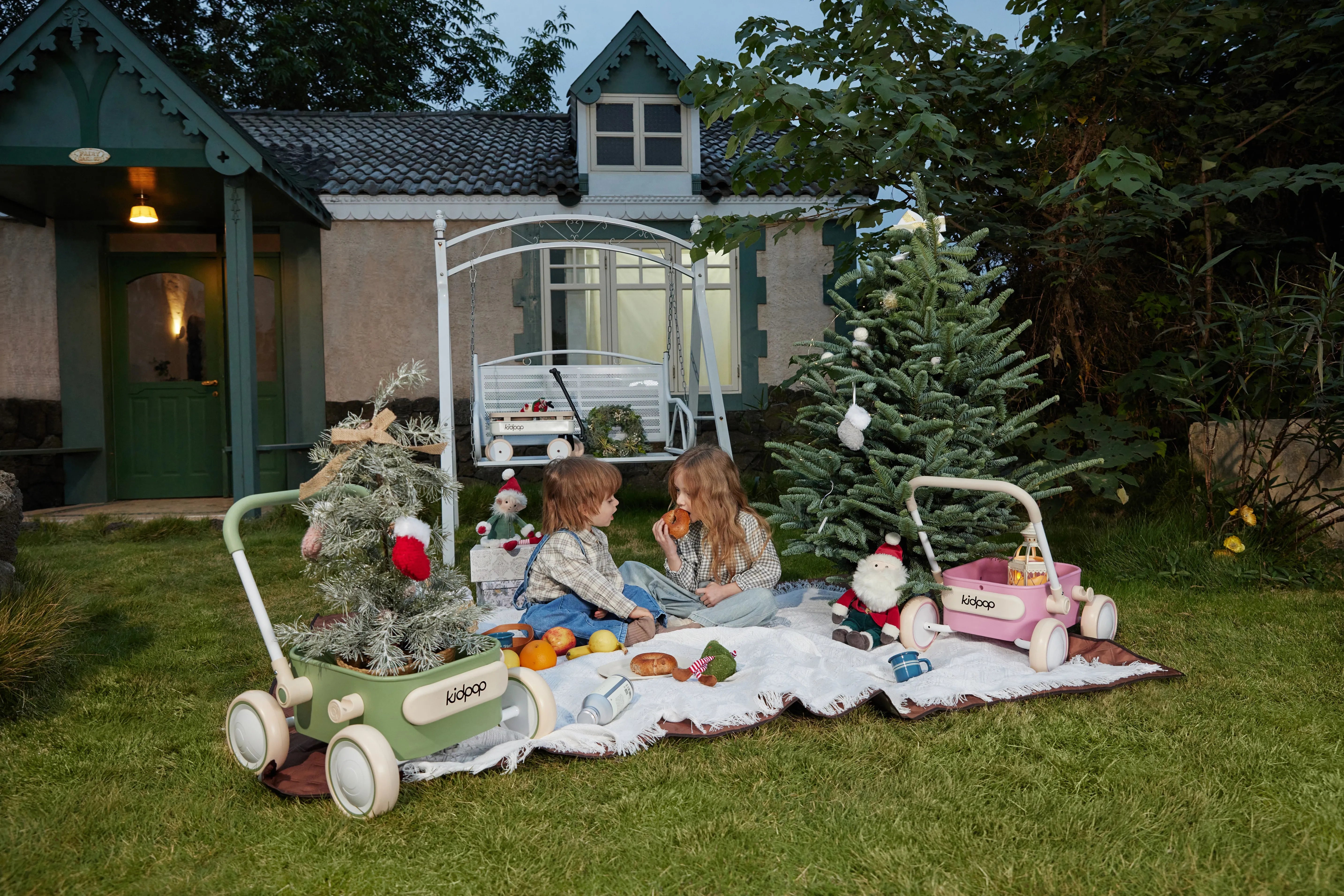
2. Mobile Picnic Party: Building Coordination with Play Food
Food play is a staple of toddlerhood. Combining it with a bike adds a dynamic element of gathering and transporting.
The Grocery Run
Scatter play food items around a designated area. Tell your child they need to "go to the market" to buy ingredients for a picnic. They must ride their baby balance bike to each item, stop, dismount, pick up the fruit or vegetable, and place it carefully in the basket.
Refining Motor Skills
The act of stopping the bike, balancing it while reaching down, and placing an object into the basket requires significant coordination. It engages their core muscles and fine motor skills simultaneously. Once the basket is full, they ride to the "picnic blanket" to unload. This sequence—ride, stop, collect, transport, unload—teaches them about processes and order, all while they think they are just making lunch.

3. Animal Rescue Mission: The Plushie Ambulance
Children often have a strong nurturing instinct toward their stuffed animals. You can leverage this by turning their bike into an emergency rescue vehicle.
The Mission
Hide a few plush toys around the garden or house. Tell your child that these animals are "stuck" or "lost" and need to be rescued. Their bike with a basket becomes the ambulance or rescue helicopter.
Emotional and Physical Engagement
As they ride to find the animals, they are practicing empathy and role-playing. When they find a "stranded" bear, they must gently place it in the basket. Riding back with a fragile passenger teaches them to control their speed. They learn that if they ride too fast or bump into things, the patient might fall out. This introduces the concept of cause and effect and encourages them to ride with care and attention rather than just speed.

4. DIY Decorating Lab: Personalizing the Ride
The basket itself can be a canvas for creativity. While this is less about riding and more about preparation, it builds a sense of ownership and pride in their vehicle.
Creative Expression
Provide your child with safe decorating materials. Ribbons, large stickers, artificial flowers, or even pipe cleaners work well. Let them weave ribbons through the holes of the basket or stick colorful shapes onto the front.
Fine Motor Practice
Peeling stickers and threading ribbons are excellent fine motor exercises for small hands. This activity allows them to customize their ride-on toy to match their personality. A personalized bike is more exciting to ride. It also encourages them to take care of their belongings. When they spend time making their basket look beautiful, they are more likely to treat the bike with respect during playtime.

5. Safety Tips: Ensuring a Safe Ride During Imaginative Play
While imagination is limitless, safety boundaries are essential. Adding items to a bike changes its balance and handling.
Weight Distribution
Teach your child not to overload the basket. A heavy load in the front can make steering difficult or cause the bike to tip forward if they stop suddenly. Explain that they should only carry light items like plushies or small toys, not heavy rocks or other children.
Visibility and Obstacles
Ensure that the items in the basket do not block their view of the ground. Hanging ribbons or overflowing toys can get caught in the wheels. Regularly check that decorations are secure and not trailing on the floor where they could cause a tripping hazard. Imaginative play should never compromise the mechanical safety of the baby balance bike.
Conclusion: Unleashing Creativity on Two Wheels
A basket is not merely an item used in storage but rather a catalyst that can help foster creative development. With the inclusion of some creative storylines or props, the otherwise dull task of riding around the driveway can become an intellectual exercise. From delivering mail or saving animals to having a mobile picnic, the opportunities are vast. This not only promotes the development of crucial motor skills but also intellectual logic. Encourage your child to view their bike with a basket as a storytelling device. Not only does this keep them occupied, but also intellectually engaged.
FAQs
At what age can a child start using a bike with a basket?
The basket is something that kids can use as soon as they start to ride their bike, usually between the ages of 18 months and 2 years old. It is recommended that parents use an empty basket to help their child get accustomed to the bike's feel before putting any toys inside the basket.
Will a basket make the balance bike harder to steer?
If the basket is empty or has only light items, this will have no effect on the steering. If the basket is filled with heavy items, the handlebars will feel heavy, which can be hard to control as a beginner.
Can I attach a basket to any ride-on toy?
Typically, the standard handlebars of most bicycles allow for the use of the universal basket with the aid of straps or zip ties. It is imperative to ensure the straps or zip ties are tight enough to avoid the swaying of the basket or falling off the handlebars.
What are the best toys to put in a bike basket?
The best lightweight items are stuffed animals, small balls, play food items, or a water bottle. You should avoid items that are sharp, heavy, or have glass in them, as they can hurt the child in case of a fall.
How does pretend play on a bike help development?
It combines physical gross motor skills (riding) with cognitive skills (planning, role-playing). Multi-tasking helps in developing neural links in coordination, spatial awareness, and problem-solving abilities.
