
The Montessori Home: Empowering Toddlers Through "Practical Life" Tools
The Montessori method emphasizes independence by allowing children to participate in daily household activities. Creating a "prepared environment" at home requires selecting functional items that facilitate movement and practical life skills rather than passive entertainment.
By integrating purposeful furniture and active tools, parents can directly support their child's physical and cognitive development. This guide explains how to set up a Montessori-aligned space and choose the right equipment, including practical toys to help baby walk, to empower your toddler's daily routines.
Why Do You Need a "Prepared Environment" at Home?
The concept of the "prepared environment" is foundational to Montessori education. It involves organizing the physical space so that a child can function independently without constant adult intervention. This requires scaling the adult world down to the child's height and physical capabilities.
Make Your Home Physically Accessible
A properly prepared home allows a toddler to reach their own clothing, access their drinking water, and retrieve their own activities. This is achieved through low, open shelving, floor beds, and step stools placed at critical areas like the kitchen counter or bathroom sink. When a child can access what they need without asking for help, they develop a strong sense of autonomy and self-confidence.
Toddlers Need Strict Visual Order
Toddlers experience sensitive periods for order. A cluttered or constantly changing room causes internal frustration and limits their ability to focus on a single task. A Montessori environment maintains strict external order: every item has a specific, permanent place. Trays and baskets are used to separate different activities. This visible structure helps the child internalize logic, sequence, and spatial awareness, allowing them to engage deeply in practical life tasks.
How to Support Gross Motor Milestones Naturally
Gross motor development in a Montessori home relies on active, self-directed movement. The environment must provide physical challenges that match the child's current developmental stage without artificially forcing them into positions they cannot achieve independently.
Transition Safely From Crawling to Standing
When a child begins to pull themselves up, they need stable, heavy objects to support their body weight. Montessori environments often use heavy wooden shelves or a stationary pull-up bar mounted to a wall. These items provide a secure base for the child to practice standing and weight-shifting. As their balance improves, they look for ways to move forward while maintaining that upright support.
Best Toys to Help Baby Walk
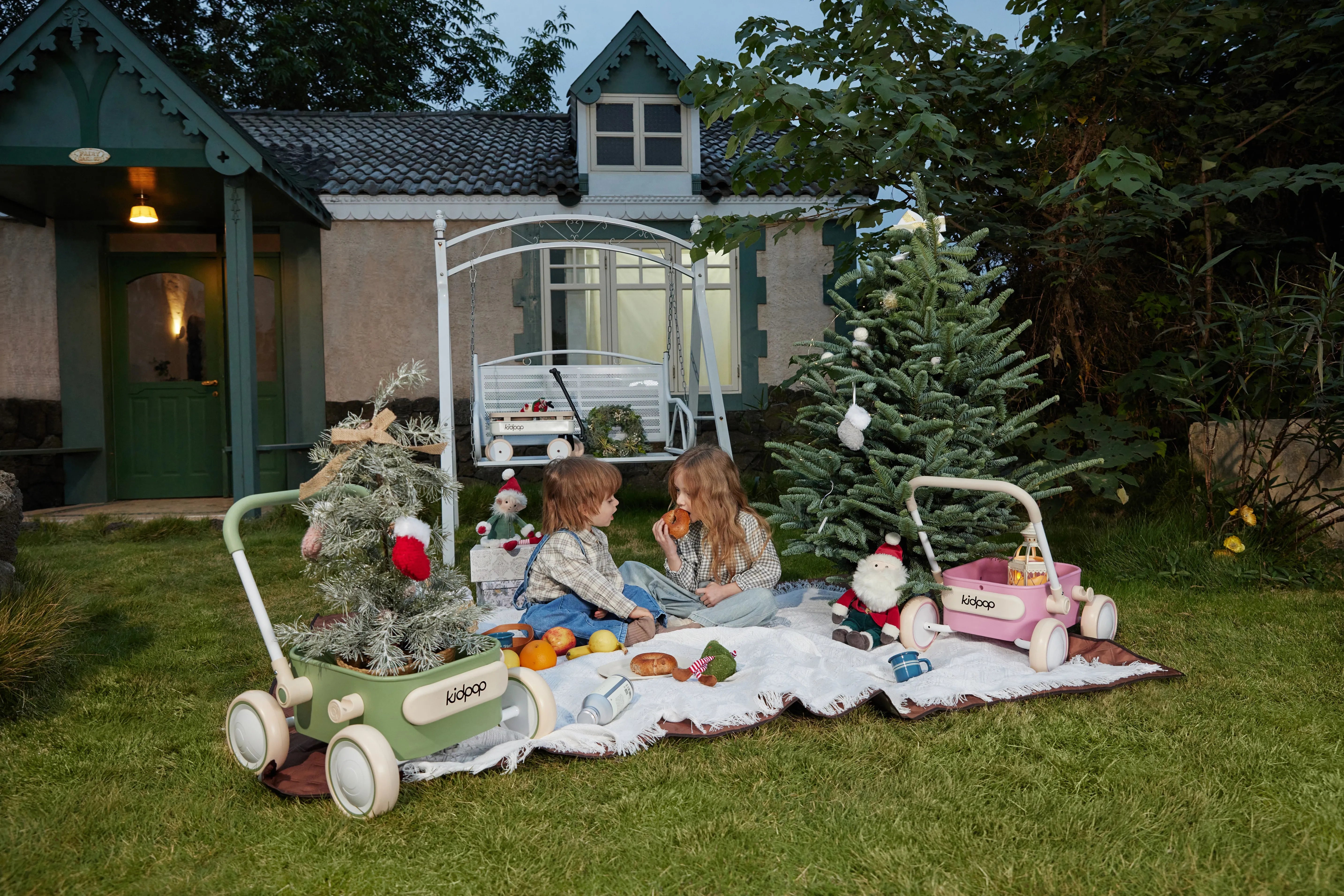
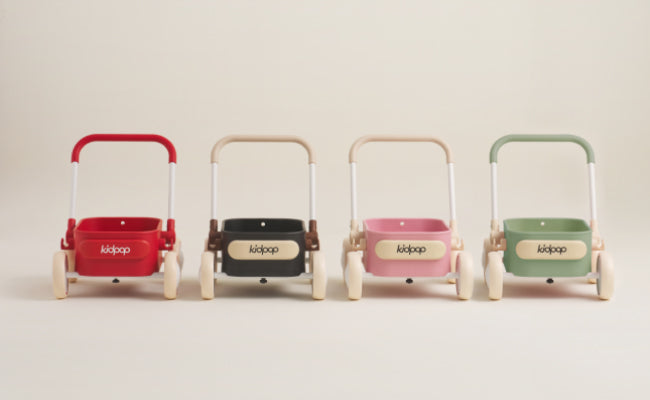
At this stage, parents often introduce specific toys to help baby walk. Montessori philosophy strictly opposes "sit-in" baby walkers, as they suspend the child's hips artificially and promote poor foot positioning (like toe-walking). Instead, the focus is on "push" tools. A solid push toy walker requires the child to support their own weight, engage their core, and coordinate their leg movements naturally. The best push walker for baby in a Montessori setting is a sturdy, wooden wagon. It provides a wide base of support and allows the child to control the pace of their movement entirely.
How Can "Transporting" Tasks Develop Independence?
In Montessori education, "practical life" activities are real-world tasks that help the child care for themselves and their environment. As toddlers gain mobility, their interest shifts toward moving objects from one place to another.
"Maximum Effort" Phase
Between the ages of 12 and 24 months, toddlers enter a developmental phase called "maximum effort." During this time, they possess a strong psychological drive to carry objects that are large or heavy relative to their own body weight. You will often see them trying to move large water jugs, heavy books, or bulky cushions. This physical exertion helps them map their body's capabilities and build profound muscle strength.
Turn a Push Toy Walker into a Practical Life Tool
A push toy walker equipped with a front storage bin or tray is the perfect tool for the maximum effort phase. It combines gross motor practice with practical life tasks. A toddler can use the walker to transport clean laundry to their bedroom, carry groceries from the front door to the kitchen, or collect scattered wooden blocks at the end of the day. This transforms a simple mobility tool into a functional piece of household equipment, allowing the child to contribute meaningfully to family chores.
Why Choose Natural and Open-Ended Montessori Materials?
Montessori materials are intentionally distinct from standard commercial toys. The focus is always on reality, durability, and sensory feedback.
The Benefits of Wood Over Plastic
Montessori environments prioritize natural materials like wood, metal, cotton, and glass. Wood provides accurate tactile feedback regarding weight and temperature, whereas plastic feels uniform regardless of its size. When a child drops a wooden block, it makes a distinct sound and behaves according to the laws of physics. These natural materials also withstand years of heavy use and repair easily, making them a sustainable choice for families.
Should You Buy Gender-Specific Toddler Toys?
Commercial markets often heavily segment children's items. When parents search for toddler toys for girls, they are usually presented with pink, plastic, battery-operated items that dictate how the child should play. Montessori explicitly rejects this highly gendered, restrictive approach. Montessori tools are universally neutral, featuring natural wood grains or primary colors. They are open-ended, meaning they have no electronic lights or sounds to distract the child. The child must provide the imagination and the effort to make the object work.
What Safety Features Matter for Autonomous Movement?
When you set up an environment that encourages a toddler to move and work independently, the safety standards for the equipment must be exceptional. Autonomous movement means the child will use the tools without an adult holding their hands.
Prevent Tipping With Proper Weight Distribution
The primary safety concern with push tools is tipping. The best push walker for baby must have a low center of gravity. The handle should be positioned in front of the rear axle. If the handle sits too far back, the child's downward pulling force will flip the walker backward, causing a fall. Heavy wooden walkers are inherently safer than lightweight plastic ones because their mass prevents the child from accelerating too quickly on hard floors.
Controll Speed With Adjustable Wheels
Different flooring requires different friction levels. A safe walker must feature rubber-trimmed wheels to prevent lateral sliding on hardwood or tile floors. Additionally, high-quality models feature adjustable tension dials on the wheels. Parents can tighten the wheels to create high resistance for a beginner who needs slow, stable support. As the child's walking becomes more confident, the parents can loosen the wheels to allow for a smoother, faster glide.
How to Integrate Movement Tools Into Daily Routines
The true value of a Montessori home lies in routine. The tools you provide should not be kept exclusively in a playroom; they should be integrated into the daily flow of the entire house.
Use Real Tools for Morning Chores
Instead of purchasing single-use commercial products or highly specific toddler toys for girls and boys that mimic real chores (like a plastic toy vacuum), provide actual, functional, child-sized tools. A toddler can use a small wooden broom to sweep up breakfast crumbs. They can use their toys to help baby walk to push their dirty dishes on a cart over to the kitchen sink. Using real tools for real tasks gives the child a genuine sense of accomplishment.
Make Cleanup an Active Physical Task
At the end of a work cycle, the child is expected to return items to their proper place. You can facilitate this by ensuring shelves are not over-stuffed and that baskets are light enough for the child to handle. By making cleanup a physical, active task that involves walking, bending, and lifting, you reinforce the child's gross motor skills while maintaining the essential order of the prepared environment.
Conclusion: Fostering Physical Independence and Cognitive Growth
Implementing Montessori principles at home involves creating an accessible environment and selecting purposeful materials. By integrating functional tools into daily routines, parents can foster physical independence and cognitive growth. Equipment designed for active movement and transporting tasks gives toddlers the confidence to participate in household life. With careful selection of safe, sustainable gear, you provide your child with the exact support they need to navigate their physical world and build lifelong practical skills safely.
FAQs
Why does Montessori discourage traditional sit-in baby walkers?
Montessori philosophy advises against "sit-in" baby walkers because they place the infant in an artificial standing position before their muscles and joints are ready to support their weight. They also prevent the child from seeing their feet, which hinders spatial awareness and the natural biomechanics of learning to balance.
What makes the best push walker for baby in a Montessori home?
The best push walker for baby in a Montessori environment is typically a wooden wagon with a heavy base, rubber-lined wheels, and a front storage compartment. It must require the child to support their own body weight and should feature adjustable wheel tension to control the rolling speed on hard floors.
How do I use a push toy walker for practical life activities?
A push toy walker equipped with a basket is an excellent practical life tool. You can ask your toddler to transport items across the house, such as taking a stack of folded towels to the bathroom, moving books back to a shelf, or helping to carry dry groceries from the hallway into the kitchen.
