
Best Gift Ideas for Toddlers This Christmas: Multi‑Use Ride‑Ons That Grow With Them
The best approach to gifting this Christmas is with long-term use in mind. Parents are now prioritizing multi-functional ride-on toys that can convert with the child’s growth. Such a product is a wonderful way to keep your kid engaged for many years, not to mention saving your money while supporting your child reaches development milestones.
Why Multi-Use Ride-Ons Are the Best Holiday Gifts for Toddlers
Toddlers grow at a rapid pace, often outgrowing shoes, clothes, and toys in the blink of an eye. What passes for a fun toy, such as a typical ride-on, may entertain a child for a six-month period, but once the child has grown in stature or developed a different set of skills, it becomes outdated. Multi-functional ride-on toys are designed with growth in mind. Through alterations in seat positioning, removal of safety supports, or transitioning from a Walker to a Rider, a single toy can support a child within a three-to-four-year-old household.
Children build confidence through familiarity. When a child learns to trust a specific piece of equipment, they are more likely to take risks and try new skills. A multi-use toy allows them to master one stage, such as pushing a walker, before transitioning to the next stage, like sitting and scooting, using the same trusted object. This continuity helps them transition smoothly from crawling to walking and eventually to riding the best toddler bike, all without the intimidation of an entirely new machine.

Which Types of Ride-On Toys Qualify as “Multi-Use” (Ride-Ons, Balance Bikes, Trikes etc.)
The balance bike has revolutionized how kids learn to ride, effectively skipping the training wheel phase entirely. A convertible model takes this a step further. These often start as three-wheeled low-riders for stability. As the child finds their center of gravity, the wheels can be adjusted or combined to form a two-wheeler. This category is excellent for building core strength and coordination.
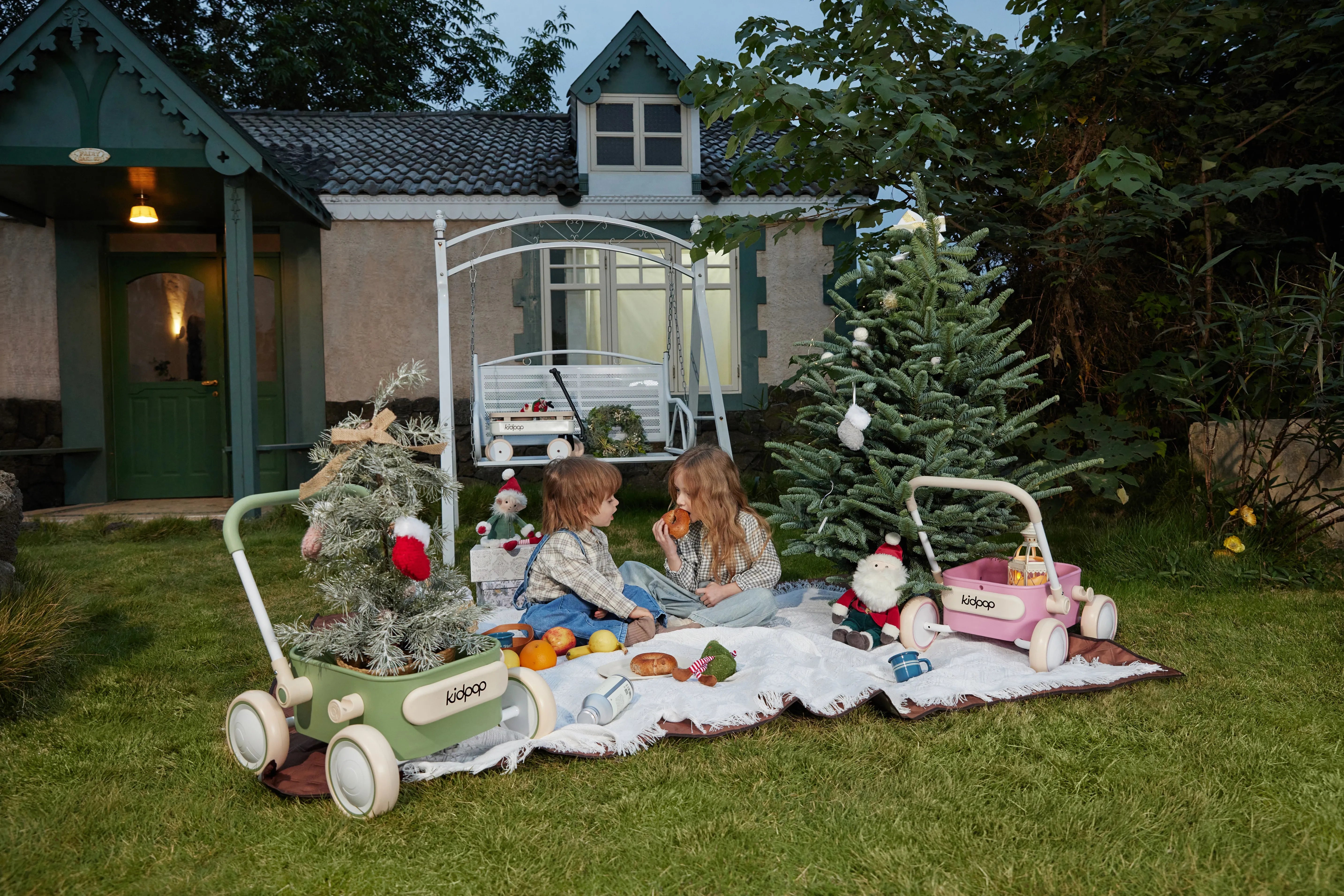
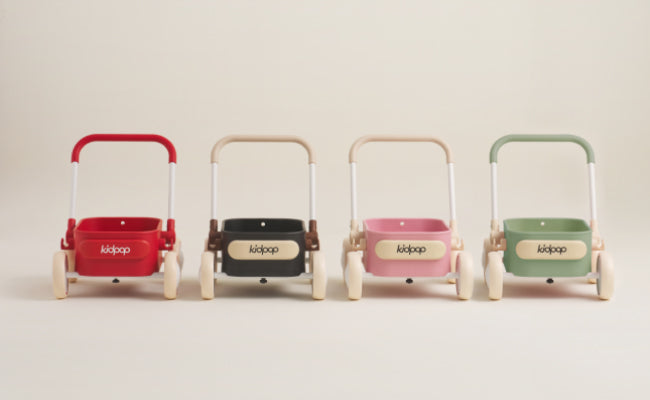
A push and pull wagon is the ultimate utility player in a playroom. In the early stages, it acts as a stable base for a baby pulling themselves up to stand. As they begin to walk, it serves as a push walker that provides necessary resistance and support. Later, it transitions into a vessel for imaginative play, allowing toddlers to haul their favorite toys, or it becomes a practical storage solution that keeps the room tidy.
5 Recommended Multi-Use Toy Ideas for Toddlers This Christmas
1: The PULA Baby Push Walker + Toy Wagon Combo
This unit is the ideal entry point for infants aged 7 months to 4 years who are transitioning from crawling to walking. Its primary differentiator is the "First Step" safety design. Unlike lightweight plastic walkers that can slip away, the PULA features a low center of gravity and shock-absorbing wheels that provide substantial resistance. This stability builds the confidence necessary for those first wobbly steps.

Once walking is mastered, the vehicle transforms into a functional toy wagon. It solves the "clutter problem" by encouraging toddlers to pack up their own blocks and plushies. The food-grade PP material ensures safety during the inevitable teething phase, and the foldable handle makes it a breeze to toss in the car for trips to grandma’s house. It is a walking aid that becomes a permanent storage solution.
2: The PONY 4-in-1 Convertible Tricycle
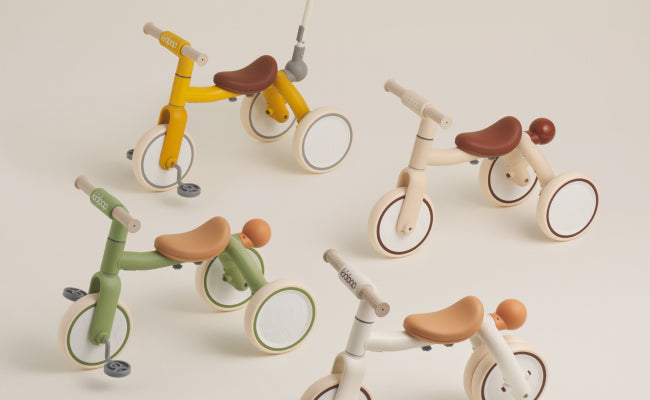
The PONY stands out as the most mechanically versatile option on this list, acting as a "Transformer" for kids aged 1 to 4. While others might offer two modes, this adapts to four: tricycle, push bike, balance bike, and scooter. This makes it the best balance bike hybrid for parents who want one piece of gear to handle every outdoor activity. This versatility makes it a top choice in our collection of 3-in-1 and 4-in-1 kids tricycles.
The unique selling point here is the removable parent push bar. It allows adults to take control when the toddler gets tired, bridging the gap between a stroller and an independent bike. With dual seat settings and adjustable handle heights, it offers a custom fit that many rigid competitors cannot match. It is the best choice for families who want to maximize outdoor mileage.
If you're wondering exactly how this versatility plays out across each developmental stage, there's a detailed breakdown of how a convertible trike grows with your child from age 1 to 4 — covering what each mode means for your toddler's coordination, confidence, and independence.
3: The BIG BEE Baby Balance Bike
Stability is the focus of the BIG BEE, making it perfect for the younger end of the toddler spectrum (1-4 years). Unlike two-wheeled balance bikes that require core strength, this model uses a four-wheel design to prevent tipping. It is specifically engineered for indoor use, featuring silent, fully enclosed wheels that will not scratch hardwood floors or trap little feet.
The design is another major factor that differentiates the product. The approachable-looking bee design is an attractive "pet" for the child, making learning to ride less intimidating. The carbon steel frame is sturdy enough to withstand rough terrain but light enough for a toddler to navigate around furniture. It is the safest product to use indoors on a rainy day.
4: The PULA-Wild 3-in-1 Kid’s Wagon
While Option #1 is for learning to walk, the PULA-Wild is designed for heavy-duty play and hauling for older kids (2.5 to 8 years). It serves as a high-capacity push pull wagon that can handle outdoor terrain. Its standout feature is its longevity and design-forward construction, utilizing carbon steel and a solid beech wood lid. While the construction is durable with a metal base and wood lid, specific materials may vary, often including E0-grade MDF for safety and sustainability.
This wagon promotes complicated creative play. It is far more than a support vehicle; it can be a "work truck" for the backyard, a "picnic basket" for the park, or a fashionable storage bench at the bottom of a bed. The variable steering is precise enough to please kids who want to transport their precious cargo with serious dedication.
5: The RIGHT Balance Bike
For the toddler ready to master true two-wheeled riding, the RIGHT Balance Bike is the performance choice. Its distinct advantage is its weight—at just 4.4 lbs, it is significantly lighter than most steel alternatives. This allows a 1.5-year-old to lift, turn, and control the bike independently, which significantly speeds up the learning curve. The lightweight, minimalist fiberglass nylon frame provides a low-step design, making mounting easy even with short legs.

What to Check Before You Buy — Safety, Materials, Durability, and Comfort
Prior to buying a ride-on, look past the color scheme in order to assess whether the product is safe for your particular environment.
- Wheel Type & Floor Safety: If your child is going to use the toy indoors, rubberized, soft, and quiet foam (EVA) wheels are ideal, while hard plastic ones might scratch wooden floors. For use with rough outdoor terrain, such as pavement or grass, tires with tread and puncture protection are best.
- Material Quality and Toxicity: The fact that a child is a toddler means that he or she is a mouth-to-hand-to-everything traveler. This means that the components should be non-toxic, such as food-grade PP or, better yet, lead-free paints. The best materials would be robust carbon steel or fiberglass nylon, which is far superior to fragile plastics.
- Adjustability/Ergonomics: For a "grow with me" tool to be considered useful, it has to be adjustable. The seat adjustments, as well as the handlebars, should be simple to change without needing complicated equipment. The seat should be cushioned with a proper ergonomic design to facilitate healthy hip positioning.
- Stability and Turning Radius: For toddlers, a small turning radius (135° is common) is a critical component from a safety perspective. This ensures that the handles do not turn too far, which is the primary reason for a tip-over incident. A low center of gravity is also essential for preventing falls during mounting and dismounting. This 135° limit is actually a steering limiter designed to prevent overly sharp turns, which enhances stability rather than creating a small turning radius.
FAQs About Toddler Ride-On Toys
Do toddlers need to wear helmets on these ride-ons?
In cases involving stable, low-speed models such as 4-wheel walkers/wagons, which are used indoors, a helmet is not necessary. But once your child progresses to a convertible balance bike or a 2-wheel mode with the capability of attaining speed, resulting in a potential fall, a helmet should be non-negotiable. The "rule" of wearing a helmet becomes simpler to enforce when your child is older.
How difficult is the assembly for these convertible toys?
Most modern ride-on toys are created with a "grandparent-friendly" assembly. For instance, RIGHT Balance Bike models may come with tool-free assembly, which takes under 10 minutes. More complex models, such as the 4-in-1 Transformer Trikes, may sometimes take longer, with a required 20 to 30 minutes, together with a screwdriver. It is essential to unpack the toy a couple of days before Christmas to prepare it for the big day.
When should I switch my child from 3/4 wheels to 2 wheels?
There is no age, but look for indicators of competence. If your child is cruising on a tricycle with their feet elevated or is running quickly on a 4-wheel bicycle without losing balance, they are probably ready. This typically occurs from 18 months to 3 years of age. The transition to riding a bicycle begins on a 2-wheeler with the seat lowered so that the child's feet can rest flat on the pedals. For clarity, the child's feet should be flat on the ground, not the pedals, to allow for stable pushing and gliding.
